

Fishing for Browns Upriver:
The Colorado River in RMNP
by Al Marlowe
The Colorado River is, in essence, many rivers in one. Anglers can pick a section to match their preferences all the way from small-creek fishing to a large river that is best suited to a float trip. And yes, WD is present on the Colorado and has affected the fish. But who's going to complain much when the choice is a lot of browns or a few large rainbows?
It's also no secret that brown trout are challenging to catch. Brookies, especially the little ones, are gullible. Cutthroats are also eager to take a dry fly, and rainbows are not particularly difficult. Browns though, are different. You may fool a brown once. If he strikes and you miss, however, he won't look at the same fly again -- at least, not until the next day; browns may be smart, but they are still no mental giants (except compared to other fish).
Not only does the Colorado offer great brown trout fishing, but anglers will also find plenty of water to fish. Beginning with the headwaters in Rocky Mountain National Park and continuing downstream to the town of Rifle, anglers can select from more than 150 miles of river. Of that distance, more than half is open to the public.
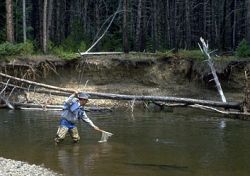
Landing one of those finicky browns
Rocky Mountain National Park
The Colorado begins its 1,400-mile journey to the Gulf of California below the Continental Divide at more than 10,000 feet elevation. The headwaters in Rocky Mountain National Park give fishermen a small-stream experience. Because of the high elevation in the park, this section is primarily a summer and fall fishery. Fishing is catch-and-release using flies and lures only. A valid Colorado fishing license is required; the park requires no permit for fishing other than the state license. You must purchase an entrance pass.
The river here is about 20 to 30 feet across and is easy to fish. Throughout its seven miles in the Kawuneeche Valley, small-stream tactics apply. With low and clear water conditions following run-off, you'll want to keep a low profile to avoid spooking fish. Browns to 16 inches, and some larger, inhabit the deep holes. Though these fish are usually eager to take a fly or nymph, early fall is the best time to try for the browns, as they're spawning then. Rainbows, brookies and cut- throats also swim here.
The river bottom is alive with insect larvae. Most are small, as should be your patterns. Stock your fly box with assorted drys, both imitations and attractor patterns nymphs also should be small. You'll want a few Gold-Ribbed Hare's Ears in various colors. Make sure to include a few in smaller sizes tied with Krystal Flash wing-cases to imitate Baetis emergers. Stock up on your favorite caddis and midge larvae imitations. Beadhead versions of these patterns should be good, too. Tie up a few generic mayfly nymphs, just in case. Throw in a few small Breadcrusts, too. Downstream from the Kawuneeche Valley, between Shadow Mountain Dam and the inlet to Lake Granby, anglers can fish the only significant tailwater section of the Colorado. Check the flows before making the trip to this section; water releases can make the river difficult or impossible to wade. Be aware that you will find few places to cross the river safely, even at low flows. Also check the regulations, as this section is closed part of the year.
You'll find a smorgasbord of fish here: browns, rainbows and mackinaw. The mackinaw trout can make for exciting fishing – and this is one of the few places where you have a chance to take one on a fly.
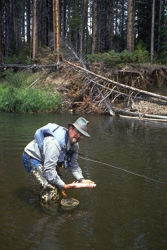
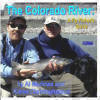
He's a beaut! A nice 14" brown
Copyright © 2000-2012 by Al Marlowe. No reproduction, linking, or copying without permission.
More info and pictures on the Gold Medal section of the Colorado River.
Resources/Other Info
 Buy a paperback or ebook on The Colorado River: A Fly
Fisher's Guide by Al Marlowe and Karen Christopherson which
includes color maps and info on the Colorado and its main
tributaries (Blue, Eagle, Fraser, Roaring Fork, Fryingpan and
Fraser). The book is over 170 pages and includes info on
access, flies, hatches, and more.....available
on Amazon
Buy a paperback or ebook on The Colorado River: A Fly
Fisher's Guide by Al Marlowe and Karen Christopherson which
includes color maps and info on the Colorado and its main
tributaries (Blue, Eagle, Fraser, Roaring Fork, Fryingpan and
Fraser). The book is over 170 pages and includes info on
access, flies, hatches, and more.....available
on Amazon