


Floating the Gunnison through the Black Canyon
by Trevor Dean
The Gunnison River runs from Almont to Grand Junction, beginning its journey at the merge of the East and Taylor Rivers. The Gunnison varies in width and character throughout its course - but no stretch is more beautiful then the Black Canyon section. Known throughout the West as a popular destination for rafters and anglers, the Canyon section is controlled by the dam at the tail end of Blue Mesa Reservoir, located near Montrose, Colorado. In some stretches, the Canyon walls drop nearly 2000 feet - almost vertically - into the river, providing some of the most spectacular scenery in the country.
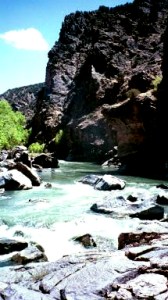 We floated the Canyon in August with
Tom and Jeremy from Gunnison River Expeditions (GRE).
GRE has been floating the canyon for nearly 20 years,
under the management of Hank Hotze, a master angler and
skilled oarsman. His guides work very hard, often
running 2 or 3 overnight trips a week down the Gorge in
the high season. Unlike “wade guiding,” Hank’s guides
are responsible not only for ensuring a good fishing
experience, but also navigating rafts through a series
of Class III, IV and V rapids - and then making camp and
dinner.
We floated the Canyon in August with
Tom and Jeremy from Gunnison River Expeditions (GRE).
GRE has been floating the canyon for nearly 20 years,
under the management of Hank Hotze, a master angler and
skilled oarsman. His guides work very hard, often
running 2 or 3 overnight trips a week down the Gorge in
the high season. Unlike “wade guiding,” Hank’s guides
are responsible not only for ensuring a good fishing
experience, but also navigating rafts through a series
of Class III, IV and V rapids - and then making camp and
dinner.
We began the trip at the Chukar trailhead, located in a high desert environment that looks more like Arizona than Colorado. After a sweaty one mile hike down with gear, the river came into view. The Gunnison River in this section is deep and green - the water is colored by sediment and plant life that creates an emerald effect.
Other than during the renowned Salmonfly hatch, which typically begins the first week of June, the Canyon section is best fished with streamers and deeply-drifted nymphs. We used two interesting rigs for fishing the Canyon that have proven successful on other waters as well. The first is a “bounce rig.” Sections of tippet are tied using blood knots, leaving the tags long. The bottom blood knot is tied “badly,” and the weight is placed on the bottom, under the two flies. This rig, although tedious to tie, enables the weight to tickle the bottom without catching the flies in the ever-present moss on the bottom. The “bad blood” knot will break once the rig snags, enabling the angler to salvage the flies.
The second rig we fished was the double-streamer rig. The initial fly, a large conehead muddler minnow or maratuka minnow, is tied directly to the end of the leader. The second fly, a smaller black or brown wooly bugger, is tied six inches behind the first streamer off the hook.
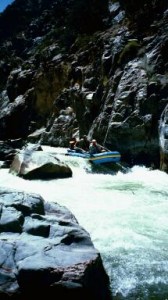 Fishing the Gunnison from a raft is physically demanding, and requires very
accurate casts. Most of the fish hold in the riffles and
pockets, and since you are floating over these rapidly,
you must always look 10 seconds ahead for your next
cast. The streamer rig is cast into these pockets and
stripped back as quickly as possible toward the boat.
Big browns, and the occasional rainbow, will chase the
flies, often hammering them right next to the boat
Fishing the Gunnison from a raft is physically demanding, and requires very
accurate casts. Most of the fish hold in the riffles and
pockets, and since you are floating over these rapidly,
you must always look 10 seconds ahead for your next
cast. The streamer rig is cast into these pockets and
stripped back as quickly as possible toward the boat.
Big browns, and the occasional rainbow, will chase the
flies, often hammering them right next to the boat
There are excellent spots to take out of the river and wade fish these riffles more thoroughly with nymphs. Use caution wading as the river bottom is slippery and the current strong. The fish are aggressive and will readily take a well-presented nymph. Common tailwater practices - fine tippets and small flies - do not apply to this stretch of water. Size 14-16 nymphs on 3 or 4x tippet are the norm.
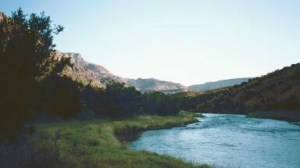 Wonderful campsites are found throughout this 12 mile stretch of water. Keep in mind
that the days are very hot in the summer in the Canyon, and the nights can often remain warm, as heat from the
Canyon walls keeps the air temperature high.
Wonderful campsites are found throughout this 12 mile stretch of water. Keep in mind
that the days are very hot in the summer in the Canyon, and the nights can often remain warm, as heat from the
Canyon walls keeps the air temperature high.
After a two-day float, we were dropped at the Pleasure Park campground, where we sat at the bar and revisited the wonderful float. For fans of incredible scenery, large trout, and technical rafting, this trip should not be missed.
Rules for the Gunnison in the Black Canyon:
This is Gold Medal water-- Artificial flies or lures only
- All rainbows must be returned to the water immediately
- Check for any other changes to regs
Resources:
All photos and text are copyrighted by Trevor Dean.